Gaganyaan’s 10-parachute descent system explained after latest Isro test
Isro's Gaganyaan crew module uses a 10-parachute system across four stages, now validated through a fifth qualification test.
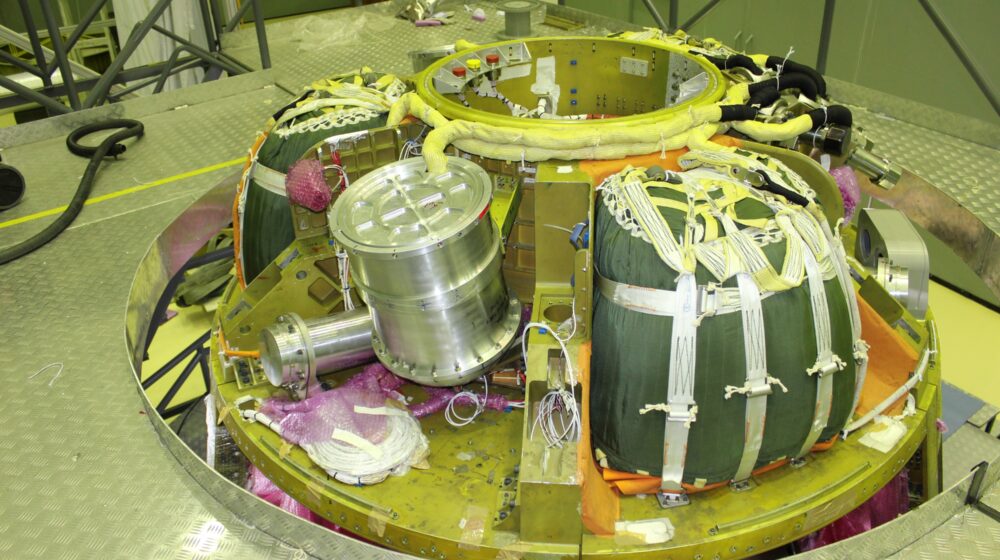
Isro’s Gaganyaan crew module relies on a deceleration system made up of 10 parachutes across four different types, a system the space agency has now validated further through its fifth Integrated Main Parachute Airdrop Test (IMAT-05), conducted on 7 July at the Aerial Delivery Research and Development Establishment drop zone in Sheopur.
According to Isro, two apex cover separation parachutes first jettison the module’s protective cover, followed by two drogue parachutes that stabilise and slow the module. Three pilot parachutes then extract the three main parachutes, which slow the module further for a safe splashdown.
In the latest test, a simulated single main parachute and dummy payload were dropped from an altitude of 2.5 km using an Indian Air Force IL-76 aircraft. After the extractor and drogue parachutes deployed to stabilise the payload, the main parachute opened and safely slowed the descent to terminal speed, validating the structural integrity and design margins of the main parachute under the most demanding load conditions expected during the G1 mission.
The test was conducted jointly by Isro, DRDO, the Indian Air Force and the Indian Army, and follows IMAT-01 in November 2022 and IMAT-03 in November 2025.

Leave a Reply