Scientists pointed the world’s best radio telescopes at the source of the ‘Wow!’ signal. They found nothing
The Breakthrough Listen initiative used the Green Bank Telescope and Allen Telescope Array to search for a repeat of the famous 1977 'Wow!' signal, but found no convincing technosignature.
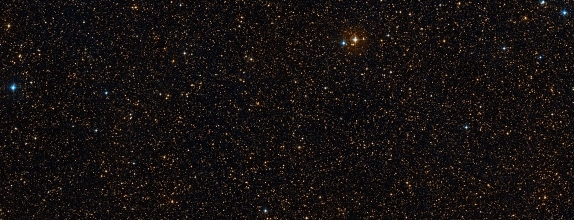
Rather than treating the “Wow!” Signal as a solved case, astronomers continue using it as a benchmark for studying unexplained radio transients nearly 50 years after it was first detected. In recent years, the Breakthrough Listen initiative pointed some of the world’s most powerful radio telescopes toward candidate stars near the signal’s estimated origin in the constellation Sagittarius, searching for any narrowband transmissions that might resemble the original event.
Despite highly sensitive observations using both the Green Bank Telescope and the Allen Telescope Array, researchers found no convincing technosignature signals. The original detection, made for just 72 seconds on the night of August 15, 1977 by a radio telescope in rural Ohio, remains one of the strongest unexplained candidates in the search for extraterrestrial intelligence.
The signal arrived close to the 1,420 MHz hydrogen line, a frequency long considered one of the most likely channels an intelligent civilisation might use to communicate across interstellar distances. It gradually increased and decreased in intensity exactly as a fixed celestial source would while passing through the Big Ear radio telescope’s field of view, occupied an extremely narrow radio frequency unlike most naturally occurring cosmic radio emissions, and lasted for the telescope’s full 72-second observing window before disappearing completely.
More recently, astronomers have revisited decades-old archival data in search of natural explanations. One emerging hypothesis suggests the famous signal may have been produced when a cold hydrogen cloud briefly flared after being struck by an intense burst of radiation from an object such as a magnetar or soft gamma repeater. Researchers emphasise this remains a hypothesis rather than a confirmed solution.



Leave a Reply