A 540-foot US Navy ship vanished in 1918 with 306 people aboard, and no one knows why
The USS Cyclops departed Barbados in March 1918 with 306 people and never arrived at its destination, remaining the largest non-combat loss of life in US Naval history.
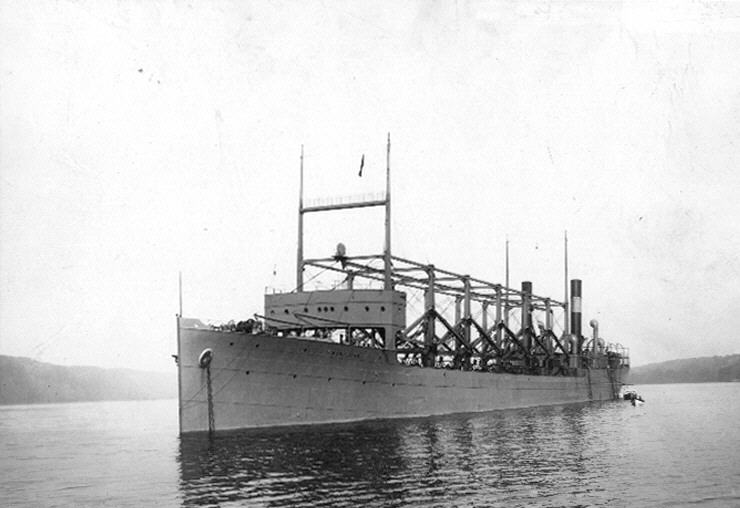
On March 4, 1918, the USS Cyclops, then the largest fuel ship in the U.S. Navy, departed Barbados on what should have been the final leg of its voyage to Baltimore. Loaded with approximately 11,000 tons of manganese ore and carrying 306 officers, sailors and passengers, the massive vessel had less than 2,000 nautical miles left to travel. It never arrived.
No distress signal was transmitted, no wreckage was recovered, and no confirmed trace of the ship has ever been found. More than a century later, the disappearance of the USS Cyclops remains the single greatest non-combat loss of life in U.S. Naval history and one of the service’s most enduring mysteries.
Built in Philadelphia, the 540-foot Proteus-class collier was designed to transport coal for the Navy’s fleet but had been reassigned during World War I to carry strategic cargo, according to the U.S. Naval Institute. Its final mission began in January 1918, when it sailed from Norfolk, Virginia, to Rio de Janeiro with coal before taking on a return cargo of manganese ore, an important material used in steel production. After loading in Brazil, the Cyclops made scheduled stops at Bahia and then an unscheduled stop in Barbados on March 3. The vessel departed the following day bound for Baltimore and was expected to arrive on March 13. It was never heard from again.
Over the years, investigators have proposed numerous explanations. Former executive officer Conrad A. Nervig later argued that the ship may have suffered catastrophic structural failure after its extremely dense manganese cargo was improperly distributed, placing excessive stress on the hull. Other theories have included mechanical problems, severe weather and overloading, although none has been conclusively proven.



Leave a Reply