Who were the Piceni? The mysterious ancient people behind Italy’s newest royal tomb find
A newly discovered burial complex in Sirolo, Italy is offering rare insight into the Piceni, a pre-Roman civilisation that shared its border with the Etruscans but left almost no written history.
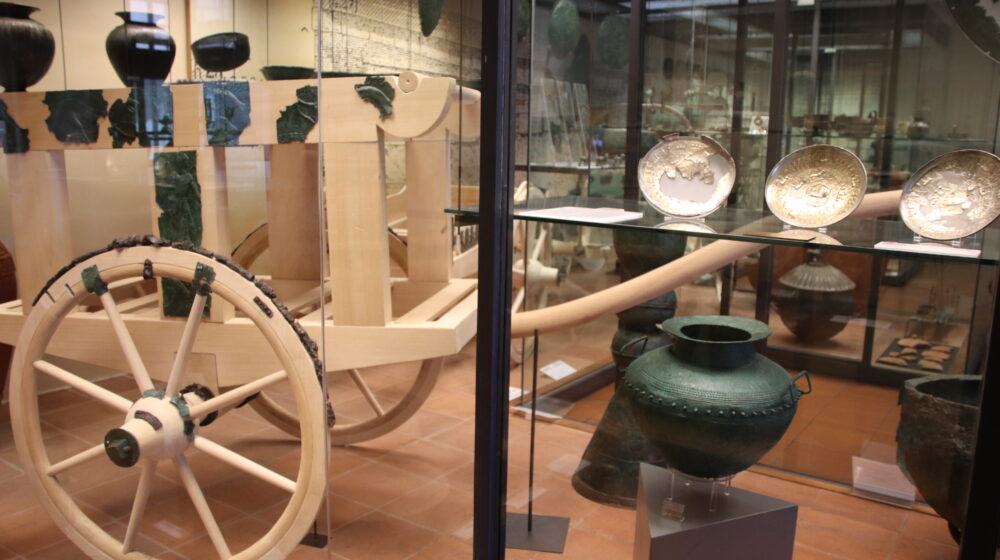
Long before Rome dominated the Italian peninsula, a civilisation called the Piceni ruled its Adriatic coast — and left almost nothing behind to explain who they were. Because they kept very few written records, archaeologists have had to reconstruct their history almost entirely through what they buried with their dead.
A newly announced discovery in Sirolo is now adding a significant piece to that picture. On July 1, the Superintendency of Archaeology, Fine Arts and Landscape for the Provinces of Ancona, Pesaro and Urbino confirmed the find of a sixth-century BC burial complex belonging to the Piceni’s ruling elite, sharing their northern border with the better-documented Etruscans.
At the heart of the complex, inside a large circular wooden enclosure, lay the grave of a man buried with an intact two-wheeled wooden chariot called a currus, along with a helmet, an axe and bronze vessels sealed with ceramic lids. Researchers believe the vessels once held food offerings or remains of a funeral feast meant for the afterlife.
Beside him was the separate burial of a woman, laid to rest with textiles, shoes and fibulae — ornate metal pins used to fasten clothing. One large fibula, decorated with amber, was found near her head and may have formed part of a headdress. Her grave lies close to the well-known Queen’s Tomb, unearthed in 1989, which held a Piceni woman buried alongside two chariots and two mules.
What sets this cemetery apart from earlier Piceni burial grounds is its design: rather than the ditch typically used to separate the living from the dead, this site was enclosed by a wooden palisade and built atop a small hill. Archaeologists say it is the first time they have identified an entire aristocratic nucleus belonging to the Piceni, following an earlier 2020 discovery in the same cemetery that turned up another princely tomb with its own iron-wheeled chariot and weapons.



Leave a Reply