Bypassing a dam: the engineering challenge behind a bold Colorado River fix
A proposal to shrink Lake Powell would require major engineering changes to Glen Canyon Dam, including bypassing it entirely.
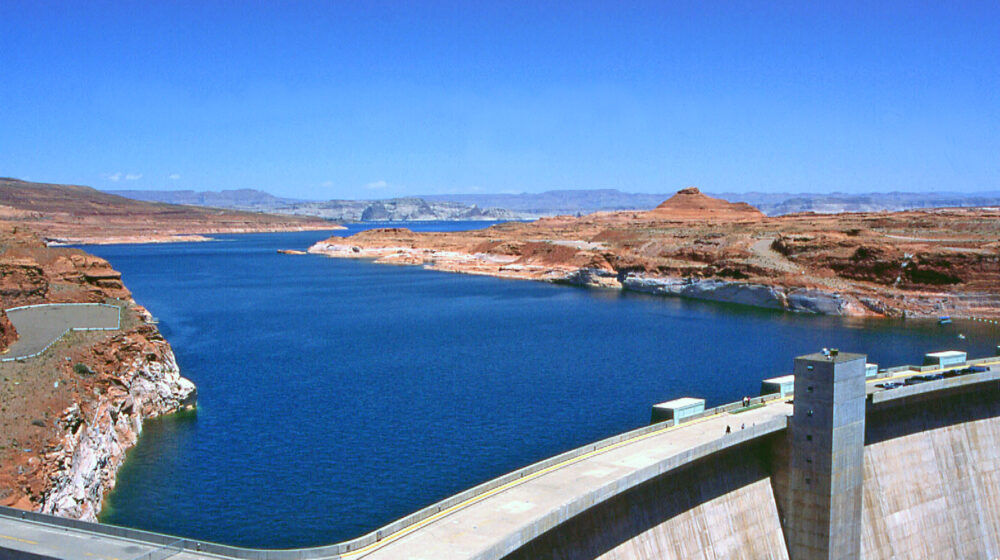
A proposal to consolidate Colorado River storage in Lake Mead rather than splitting it between two reservoirs would require major engineering changes to Glen Canyon Dam, including potentially bypassing it entirely, according to supporters of the plan known as “Fill Mead First.”
Glen Canyon Dam and its outlet works were designed around Lake Powell’s existence, and modifying the system to transfer water directly downstream would require substantial engineering work while preserving hydropower generation and interstate water deliveries — a complication that has made the proposal one of the most debated ideas in Western water management.
Supporters argue that maintaining two partially filled reservoirs wastes precious water through evaporation and seepage while increasing the risk that both could eventually reach critically low levels, and point to ecological recovery already visible in sections of Glen Canyon that have re-emerged as Lake Powell’s water levels have declined.
Critics, however, including Arizona Department of Water Resources Director Tom Buschatzke, argue that removing Lake Powell would eliminate a crucial buffer that stores water during wet years and releases it during prolonged droughts — a debate the U.S. Bureau of Reclamation is weighing as it develops new operating rules for the river system beyond 2026.


Leave a Reply