A Vietnamese cave discovery is a reminder of how little we know about what’s underground
The discovery of Thang Cave, packed with rare cave pearls, in Vietnam's Phong Nha-Ke Bang National Park shows how much of the country's underground landscape remains unexplored.
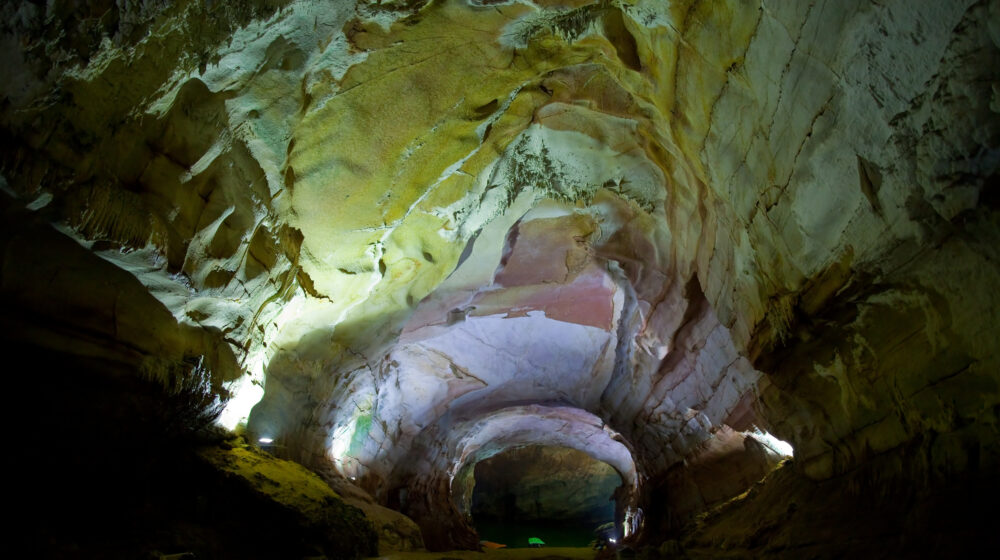
Despite decades of speleological research, much of Vietnam’s underground landscape remains unmapped — a point underscored by the recent discovery of Thang Cave in Phong Nha-Ke Bang National Park, a new cavern found to contain an unusually large cluster of rare cave pearls.
Researchers exploring the park’s limestone karst in Quang Tri Province identified the cave, whose name translates to “Victory Cave.” The site sits within a protected UNESCO World Heritage Site famous for its extensive network of caves, underground rivers and dramatic karst formations, many of which have still only been partially explored.
According to a report by TV BRICS, the cave pearls found inside Thang Cave are smooth, bright white mineral formations that develop when mineral-rich water repeatedly deposits thin layers of calcium carbonate around tiny particles over thousands of years, eventually forming near-perfect spheres. Though such formations exist in limestone caves around the world, experts say encountering them in clusters this large and dense is exceptionally rare, even for experienced cave survey teams.
Scientists believe the discovery could be just the beginning, with further exploration of the park’s caves potentially revealing new geological features and species adapted to underground life. At the same time, researchers stress the importance of protecting these fragile ecosystems, since even minor disturbances can damage cave pearl formations and other structures that took thousands of years to develop.


Leave a Reply