How a dying Pennsylvania town became a decades-long science experiment
Centralia, Pennsylvania has become a long-term natural laboratory for scientists studying how underground coal fires behave.
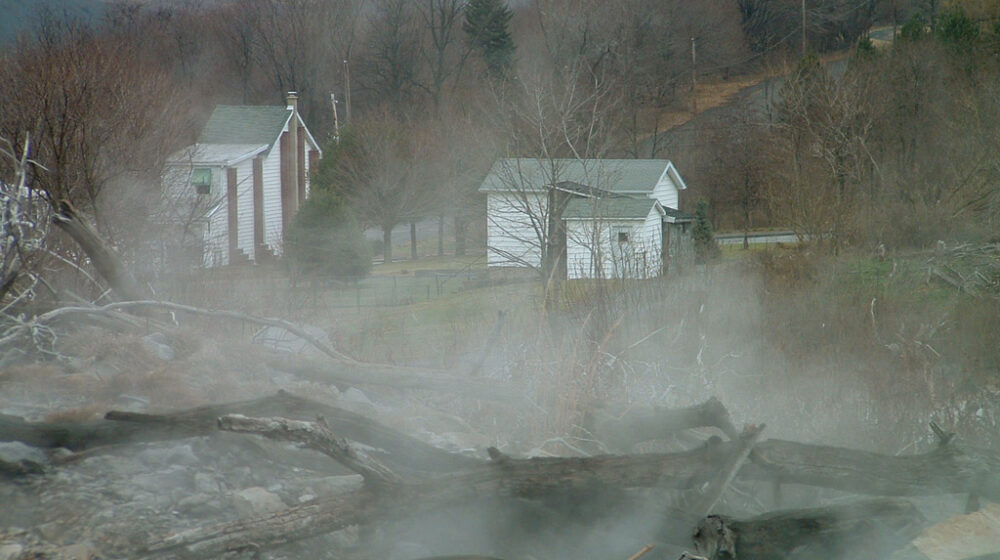
The disaster that emptied Centralia, Pennsylvania has also drawn the attention of geologists and environmental scientists, who have continued monitoring the town for decades to better understand how underground coal fires behave.
Thermal imaging, gas measurements and remote sensing have helped researchers track the fire’s movement beneath the surface and identify active combustion zones. Because underground coal fires can release carbon dioxide, carbon monoxide and other harmful gases while remaining hidden for decades, lessons from Centralia have informed research into similar fires burning elsewhere in the United States and around the world.
The fire traces back to May 1962, when officials ignited a landfill in an abandoned strip-mining pit ahead of Memorial Day, inadvertently reaching the exposed Buck Mountain coal seam. What followed was an underground blaze that spread through a network of abandoned mine tunnels, forcing the eventual evacuation and demolition of most of the town after a near-fatal sinkhole incident in 1981.
Today, the town serves not only as a cautionary tale but also as a long-term natural laboratory for studying one of the planet’s most persistent underground hazards — illustrating the lasting consequences of abandoned mining infrastructure, complex geology and delayed intervention.

Leave a Reply