The Hillsborough meteorite: how one homeowner’s gloves preserved a piece of the early solar system
Careful handling by a New Jersey homeowner helped preserve a 4.5-billion-year-old meteorite that crashed through a roof in 2024, giving scientists one of the cleanest carbonaceous chondrite samples in years.
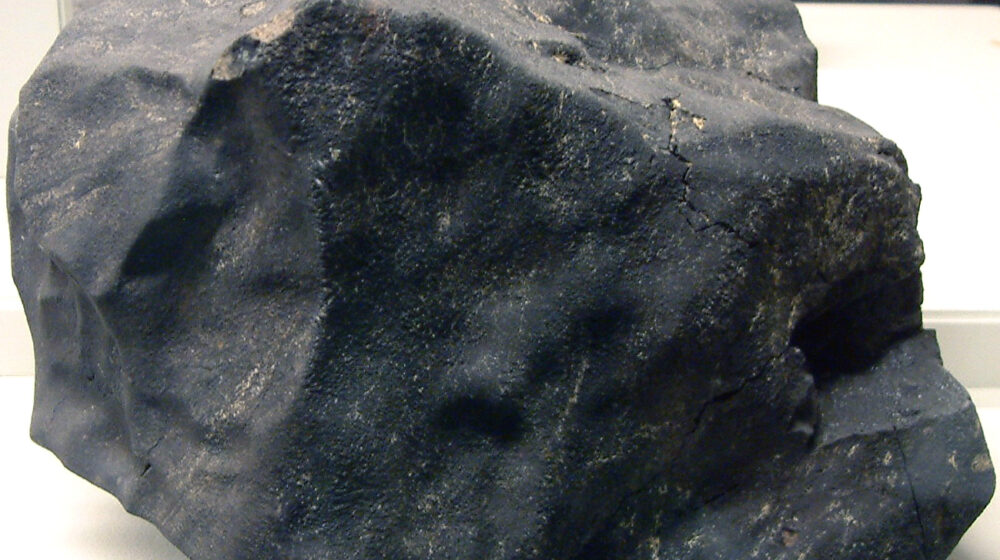
Meteorites often lose scientific value soon after they reach Earth, absorbing moisture, dust and chemicals from their surroundings. Carbon-rich meteorites are especially vulnerable because they can easily exchange material with the environment around them. But when a meteorite crashed through the roof of a Hillsborough, New Jersey home in 2024, the way it was handled afterward turned out to matter almost as much as the rock itself.
The homeowner who found the fragments wore gloves and placed them in containers rather than touching them directly, a simple step that reduced contamination from skin oils and moisture. Some pieces still picked up small amounts of material from the roof and carpet they struck, but much of the original space material remained remarkably intact, leading scientists to later describe the fragments as some of the best-preserved examples of their type collected in recent years.
The object arrived dramatically. On 16 July 2024, a bright fireball streaked across the eastern United States sky, producing a loud sonic boom heard from New York to New Jersey. Estimated at around 50 kilograms before breaking apart, the meteorite sent one fragment through the roof and ceiling of a bedroom, where its dark, sulphur-smelling pieces immediately struck the homeowner as unusual.
Laboratory analysis classified the sample, now known as the Hillsborough meteorite, as a CM1/2 carbonaceous chondrite, a rare group that formed close to 4.5 billion years ago during the earliest stages of the solar system. Portions of the meteorite show signs of past water reactions, while other portions remain largely unaltered, giving the rock a mixture of CM1 and CM2 characteristics.
Inside the fragments, scientists found organic materials, amino acids and salt-rich mineral deposits. The organic compounds do not prove that life existed within the meteorite, but they add to scientific understanding of the chemistry present before life appeared on Earth. The salt deposits suggest the parent asteroid once had areas where liquid water pooled and later evaporated, leaving minerals behind.
Researchers also traced the meteorite’s path using public videos, security camera recordings and weather radar from Newark Airport, which picked up a trail of smaller fragments falling across the region as the object broke apart. The findings point to an origin in the inner region of the asteroid belt, between Mars and Jupiter.
Image credit: Wikimedia Commons/by James St. John



Leave a Reply