Cheating emissions tests to a nuclear meltdown: the price of a debt to the truth
From carmakers cheating on emissions tests to the 1986 Chernobyl disaster, cover-ups tend to delay a reckoning rather than prevent one, a pattern that traces back to Soviet scientist Valery Legasov's account of the nuclear meltdown.
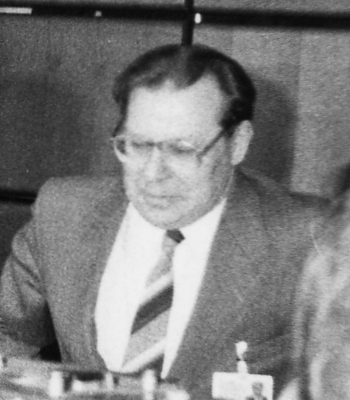
The idea that a lie is really just a debt that gets paid later is not confined to history books. In recent years, some car companies have been caught cheating emissions tests, and some aircraft manufacturers have faced accusations of rushing safety checks to meet production targets, both cases where hiding a problem only delayed a far costlier reckoning. The phrase used to describe this pattern, ‘Every lie we tell incurs a debt to the truth. Sooner or later, that debt is paid,’ traces back to the story of the 1986 Chernobyl nuclear disaster and the Soviet scientist who exposed it.
The line itself was written for television. Screenwriter Craig Mazin penned it for the character of Valery Legasov in the 2019 series Chernobyl; the real Legasov, the Soviet chemist who led the emergency response to the disaster, never spoke those exact words. What he did leave behind were hours of audio cassettes, secretly recorded before he died by suicide on 27 April 1988, exactly two years and one day after Reactor No. 4 exploded, describing a systematic campaign of institutional deception by the Soviet state and the KGB.
That deception began well before the explosion. The USSR had for years hidden a structural flaw in its RBMK reactors, in which control rods tipped with graphite could cause a catastrophic power surge instead of a safe shutdown. The flaw drove the reactor’s output to around 30,000 megawatts against a design capacity of just 3,200 MW, splitting the core open. A control-room meter capped at 3.6 Roentgen per hour then gave officials a false reading of the aftermath, when actual radiation levels outside the shattered reactor exceeded 15,000 Roentgen per hour.
The cover-up did not stop there. Thousands of workers were sent to shovel burning graphite off the roof with inadequate protection, military units culled pets and livestock around Pripyat to stop radiation spreading through fur and meat, and topsoil across the area was scraped up and buried under concrete. When Legasov later disclosed the reactor’s design flaws to the international scientific community in Vienna, the Soviet state punished him with surveillance, stripped honours and isolation from colleagues.
He was recognised only after his death, receiving the title Hero of the Russian Federation in 1996 and the Order of Lenin. Former Soviet leader Mikhail Gorbachev later said the disaster played a major role in exposing the dishonesty within the Soviet system and, in turn, in the USSR’s collapse.
The official death toll from Chernobyl remains fixed at 31, a 1986 figure covering only the immediate blast and acute-radiation deaths within three months, while the World Health Organization estimates 4,000 to 9,000 fatal cancers among the most exposed clean-up crews and residents over the long term.
Image credit: Wikimedia Commons/by IAEA Imagebank

Leave a Reply