Japan’s RIKEN just cracked hair regrowth’s last missing piece
A study from RIKEN Institute and OrganTech identifies a previously unknown 'third cell' that, combined with two known cell types, rebuilt a complete hair growth cycle in mice.
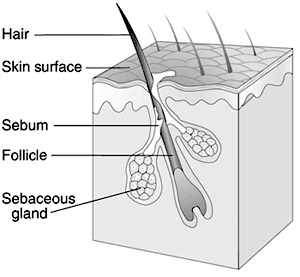
Researchers at Japan’s RIKEN Institute, working alongside the regenerative medicine company OrganTech, say they’ve closed a long-standing gap in the science of hair regrowth by identifying a previously unknown ‘third cell.’ Combined with two already-known cell types, this cell allowed the team to fully reconstruct a hair follicle capable of a normal, repeating growth cycle. The findings appear in the journal Biochemical and Biophysical Research Communications.
Around 80% of men and 50% of women experience pattern hair loss at some point, and the condition can weigh heavily on confidence and self-image. Nearly all treatments on the market today — oils, medications, transplants — are built to slow hair loss rather than reverse it, which is the gap this research specifically targets. The study was led by Takashi Tsuji, a visiting senior researcher at RIKEN and OrganTech’s chairperson, who has spent close to 20 years developing methods to regenerate organs from adult stem cells.
Hair grows through four distinct phases — anagen, catagen, telogen and exogen, covering growth, transition, rest and shedding — and in 2012, scientists first managed to build a follicle foundation in the lab by combining epithelial stem cells and dermal papilla cells from adult mouse whiskers, which could induce hair growth once transplanted. But those structures weren’t self-sufficient: extra cells from nearby tissue kept migrating in after transplantation to prop them up, indicating a piece of the system was still missing.
Using specialised cell-isolation techniques, Tsuji’s team eventually identified that missing piece as around-bulge mesenchyme (ABM) cells, located in tissue near the hair follicle. Layering ABM cells with the two known cell types and transplanting the combination into engineered skin let all three work together to reproduce the full hair cycle in mice under lab conditions, with the new cells shown to trigger the shift into active growth and support the follicle’s elongation.
The study additionally uncovered a mechanical detail about hair growth that hadn’t been clearly documented before: instead of simply being pushed upward, the hair bulb at the follicle’s base gradually shifts downward toward the subcutaneous fat layer as the visible strand rises through the skin — a ‘downgrowth’ process driven by the newly identified cells as they differentiate.
Looking ahead, the researchers say a future therapy could involve harvesting these regeneration-supporting cells from patients, expanding them in culture, and reintroducing them to affected areas of the scalp. OrganTech CEO Yoshio Shimo described the work as defining “a foundational cellular configuration for functional hair follicle regeneration,” and said it reinforces the company’s wider strategy in organ-level regenerative medicine.
Image credit: Wikimedia Commons/NIH (public domain).


Leave a Reply