A NASA Satellite Just Revealed the Black Sea’s Secret Colour Switch
NASA's PACE satellite photographed the Black Sea turning a pale turquoise shade on 22 June 2026, a seasonal change scientists trace to blooms of microscopic phytoplankton called coccolithophores.
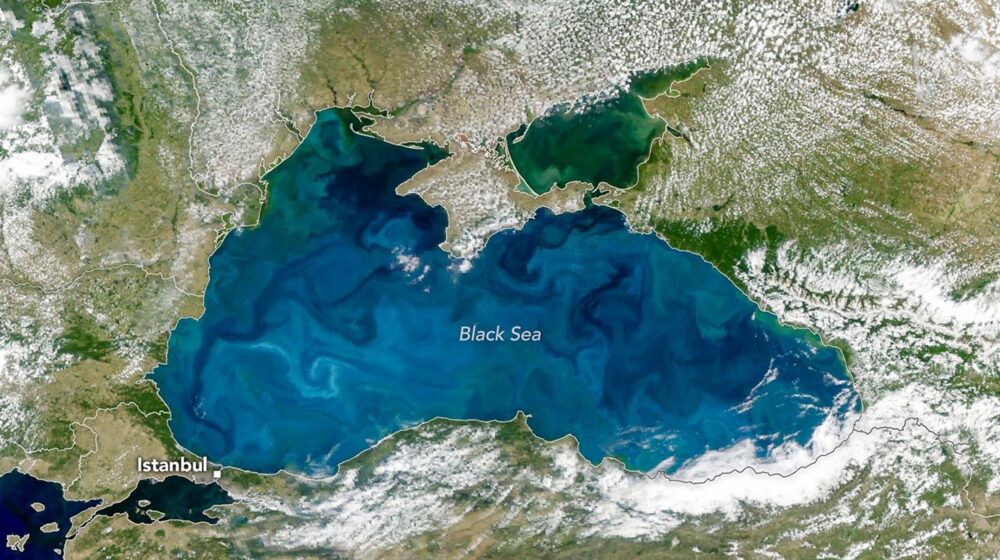
A satellite image captured by NASA on 22 June 2026 showed the Black Sea in an unfamiliar shade, with large sections of the water turning a pale, milky turquoise instead of its usual dark blue. The picture came from the Ocean Color Instrument aboard NASA’s PACE satellite, which monitors oceans, the atmosphere and ecosystems from orbit.
NASA scientists attribute the colour shift to blooms of coccolithophores, microscopic phytoplankton covered in calcium-carbonate plates. When these organisms grow in large numbers, sunlight reflects off their plates and turns the surrounding water a pale, milky colour that stands out clearly from space.
These blooms tend to appear most often in late spring and early summer, before other types of phytoplankton, such as silica-shelled diatoms, become dominant later in the year. Diatoms generally darken the water instead of lightening it, giving the Black Sea a different appearance depending on the season.
The colour change was not confined to the open sea. On 27 May 2026, an astronaut aboard the International Space Station photographed the Bosphorus strait near Istanbul, capturing ribbons of turquoise water tracing the currents on both sides of the channel that connects the Black Sea to the Sea of Marmara.
NASA says the shifting colours reflect changes in biological activity in the sea rather than any change in the water itself. The coccolithophore blooms also carry carbon absorbed during their life cycle, some of which sinks toward the seabed and can remain stored there for extended periods after the organisms die.
Because the blooms are so reflective, they are relatively easy for satellites to track, giving researchers a way to study marine ecosystem changes across large stretches of ocean without needing to sample the water directly.
NASA Earth Observatory/by Michala Garrison

Leave a Reply