Scientists changed their minds: the ocean’s ‘unstoppable’ tipping point is real
A leading ocean physicist who once dismissed a full Atlantic current shutdown as unlikely now says the risk of crossing a tipping point is real, based on new data and climate modelling.
For years, ocean physicist Stefan Rahmstorf viewed a complete shutdown of the Atlantic Meridional Overturning Circulation, or AMOC, as a highly unlikely, worst-case scenario. Recent data and advanced climate modelling have changed his mind, according to a BBC report, leading him to believe the risk of crossing a definitive tipping point is real.
The AMOC is a network of ocean currents that acts as a planetary conveyor belt, pulling warm surface water from the tropics toward the Arctic and sending colder, denser water thousands of miles back south through the deep ocean. It carries roughly one petawatt of heat northward, an amount of energy equal to about 50 times the total power humanity consumes, and explains why Britain has a milder climate than other regions at the same latitude.
Rahmstorf, who has studied the system for three decades at the Potsdam Institute for Climate Impact Research, points to a patch of unusual cooling in the North Atlantic, nicknamed the ‘cold blob,’ as a clear fingerprint of a slowing current. The mechanism comes down to seawater density: melting ice and heavier rainfall are adding fresh water to the North Atlantic that is too light to sink the way colder, saltier water does, weakening the circulation further in a feedback loop.
If the system crosses the tipping point, researchers say, the shutdown could become self-amplifying and effectively unstoppable. The consequences would be felt worldwide, including significantly colder and drier winters for the UK and northwestern Europe, and disruption to the West African monsoon and tropical rainfall belts that hundreds of millions of people across the Amazon and Africa depend on.
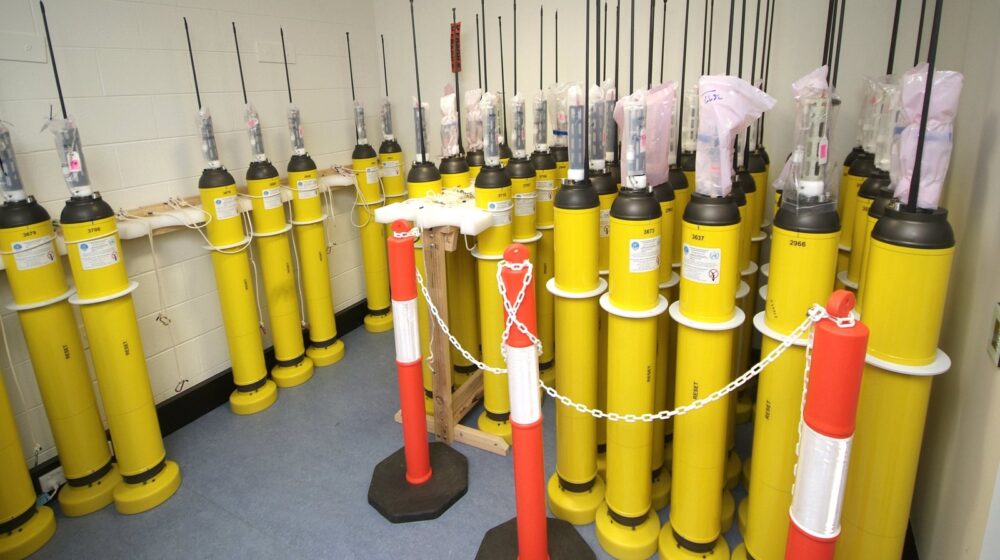
To track the system, scientists are using uncrewed floats, including a bright yellow, human-sized probe drifting in the waters off Greenland that dives, measures temperature, pressure and salinity, then surfaces to beam its data to a satellite before sinking back down.
Not all researchers share Rahmstorf’s outlook. Andrew Watson, a Royal Society Research professor at the University of Exeter, has said the AMOC has changed before in Earth’s history and argues it may simply reorganise its sinking zones rather than collapse outright. A UK Met Office study similarly found a full shutdown unlikely within this century, and the Intergovernmental Panel on Climate Change’s 2021 assessment expects the current to weaken in the coming decades without stopping before 2100.
Wikimedia Commons/by Bruce Miller, CSIRO



Leave a Reply