Warming Oceans Could Make These Invisible Sky Rivers Even More Dangerous
A new study warns that as oceans warm, the moisture-source regions that fuel atmospheric rivers could make future floods more intense.
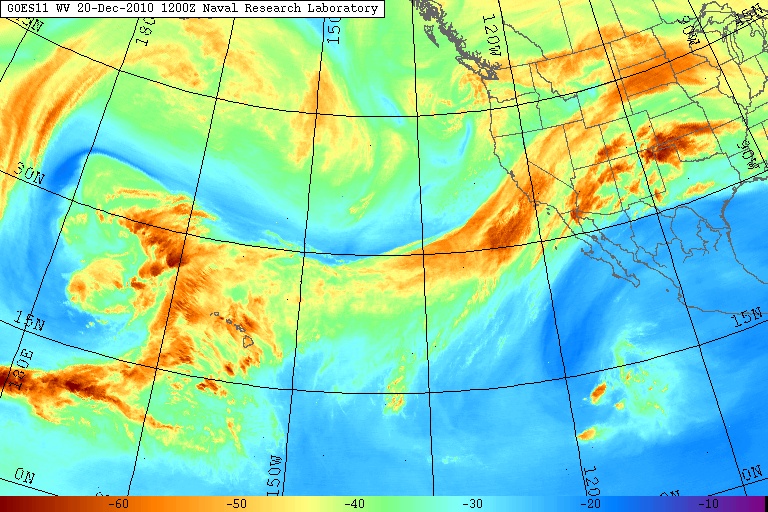
As oceans continue to warm, a weather system responsible for some of the world’s most destructive floods could be about to get even stronger. A new study published in Climate and Atmospheric Science has, for the first time, mapped the exact ocean regions where atmospheric rivers gather the moisture they later unleash as heavy rain, and researchers say those same regions are likely to produce more evaporation as sea temperatures rise.
Atmospheric rivers are long, narrow corridors of water vapour that can stretch thousands of kilometres across the sky while spanning only a few hundred kilometres in width. To trace where these systems pick up their moisture, researchers analysed over 40 years of global atmospheric data, combining satellite observations, weather reanalysis records and computer modelling to follow atmospheric rivers from formation to landfall.
The study found that rather than absorbing water evenly along their path, atmospheric rivers gain most of their moisture from a limited number of ocean ‘hotspots’, where warm surface temperatures and specific wind patterns drive intense evaporation. Areas in the eastern Indian Ocean and western Pacific near Australia were identified as key source regions, feeding systems that can go on to affect Australia, New Zealand, South America or Antarctica.
Researchers also found that some atmospheric rivers draw moisture from multiple ocean regions during their journey, while others rely on a single source for their entire path. Overall, these systems carry close to 90% of the water vapour that moves from the tropics towards the poles, underlining just how much of the planet’s water cycle depends on them.
The risk comes when an atmospheric river reaches land and is forced upward by mountains or weather fronts, causing the vapour to cool and fall as rain or snow. Strong or slow-moving systems can produce prolonged, intense rainfall, and past atmospheric-river floods have caused billions of dollars in damage across Australia, California, western Europe, South America and New Zealand.
Beyond improving forecasts by letting meteorologists monitor ocean moisture hotspots rather than just coastal conditions, the researchers say the new map could help scientists understand how atmospheric rivers respond to a warming climate. As oceans heat up, evaporation from these source regions is expected to increase, supplying more moisture to atmospheric rivers and potentially fueling more extreme rainfall events in the years ahead.
Image credit: Wikimedia Commons


Leave a Reply