Scientists found the fingerprint microbes left in rocks 2.4 billion years ago
A distinctive sulfur isotope signature that vanishes from 2.4-billion-year-old rocks is one of the clearest pieces of evidence for Earth's Great Oxidation Event.
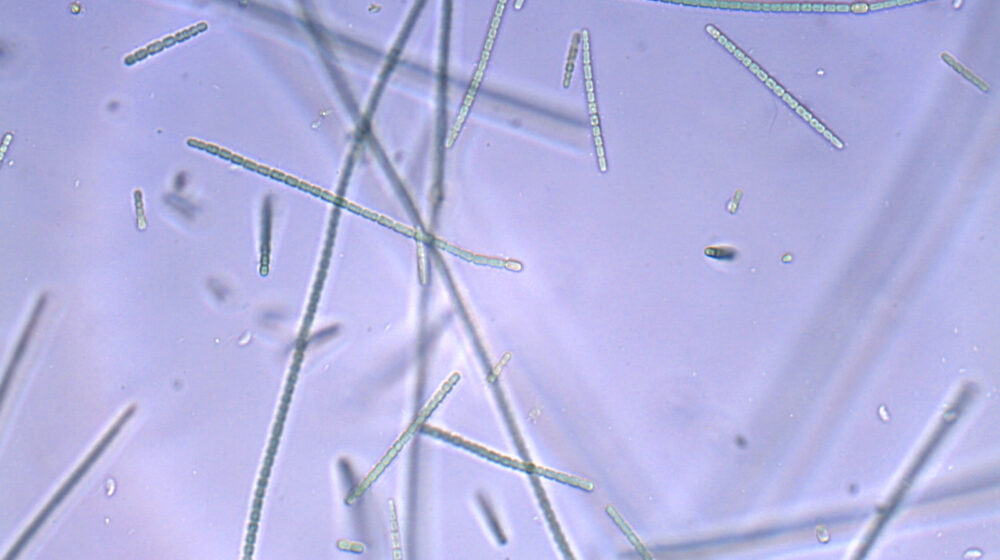
Buried in sedimentary rocks roughly 2.4 billion years old is a chemical clue that has helped scientists pin down one of the most important transformations in Earth’s history. Geologists have identified a sudden disappearance of mass-independent fractionation of sulfur isotopes in rocks of that age — a signature that can only exist in an atmosphere with extremely low oxygen levels. Its disappearance is considered one of the clearest indicators that oxygen levels in the atmosphere had risen.
That rise marks what scientists call the Great Oxidation Event, when microscopic organisms known as cyanobacteria began producing oxygen through photosynthesis and fundamentally altered Earth’s chemistry. According to a review titled ‘The rise of oxygen in Earth’s early ocean and atmosphere’, published in Nature, this transformation permanently reshaped the planet’s atmosphere, oceans, and the future evolution of life.
Before this event, Earth’s atmosphere was almost entirely devoid of oxygen, dominated instead by gases like methane and carbon dioxide, while simple microbial life thrived in oxygen-free conditions. The review argues that oxygenation was not a single switch but a long, drawn-out process: free oxygen first accumulated in the atmosphere, then lagged in the oceans, and only reached near-modern levels in both roughly two billion years later.
Cyanobacteria are believed to have evolved oxygen-producing photosynthesis hundreds of millions of years before atmospheric oxygen actually began to accumulate. Initially, the oxygen they released reacted with dissolved iron and other reduced compounds in the ocean and Earth’s crust, functioning as natural ‘oxygen sinks’ that prevented the gas from building up in the air. Only once these sinks became saturated did oxygen begin accumulating in significant amounts, around 2.4 billion years ago — which is why the rock record from that period is so revealing.
The rise in oxygen had consequences well beyond the atmosphere. According to a separate study, ‘Paleobiological Perspectives on Early Microbial Evolution’, oxygen reacted with atmospheric methane, a greenhouse gas far more potent than carbon dioxide, causing methane concentrations to fall sharply — a shift scientists suggest may have contributed to the Huronian glaciation, one of Earth’s earliest known ice ages.
Oxygen also proved toxic to many microorganisms that had dominated early ecosystems, even as it opened the door for organisms capable of using oxygen far more efficiently to generate energy — a shift that, per the Annual Review of Earth’s Planetary Sciences, laid the groundwork for the later evolution of complex eukaryotic cells and eventually multicellular life.
Wikimedia Commons



Leave a Reply