Smaller fish could mean smaller catches for the world’s fisheries
As ocean warming pushes marine animals to shrink, scientists warn the effect could ripple across food webs and eventually hit the fisheries coastal communities rely on.
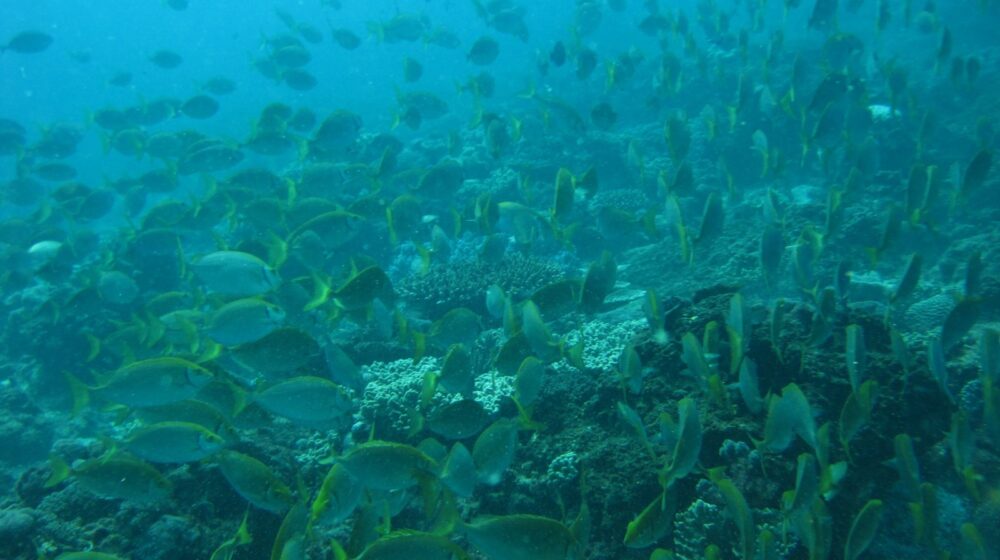
Since body size directly affects how much an animal eats, how many offspring it can produce and how much food it provides to other species, a broad shift toward smaller bodies in the ocean has the potential to ripple across entire food webs, eventually affecting the fisheries that coastal communities and commercial industries rely on for food.
That warning comes from a massive new study showing that marine animals have been shrinking during periods of ocean warming for nearly 450 million years. Researchers built one of the largest collections of marine body size data ever assembled, drawing on almost 9,000 recorded changes and over 1.6 million measurements from fossils, historical records and living animals.
The effect isn’t just historical. One existing study of thousands of reef fish surveys around Australia found that average fish length dropped by roughly 5% for every 2-degree Fahrenheit rise in ocean temperature, according to Wolfgang Kießling, who leads a paleoenvironmental research group at Friedrich Alexander Universität Erlangen Nürnberg.
Researchers say the shrinking seen in today’s warming seas appears to be following a pattern set deep in geological time, and animals will likely keep shrinking as ocean temperatures continue climbing, until warming eventually stops merely stunting growth and starts pushing species toward extinction. The findings are published in the Proceedings of the National Academy of Sciences.
Image: Wikimedia Commons/by Xplore Dive


Leave a Reply