He changed modern medicine forever, so why did he never win a Nobel Prize?
Yellapragada Subbarow helped develop folic acid supplementation, the first childhood leukaemia treatment, the first tetracycline antibiotic, and a drug still used to fight elephantiasis, yet never won a Nobel Prize.
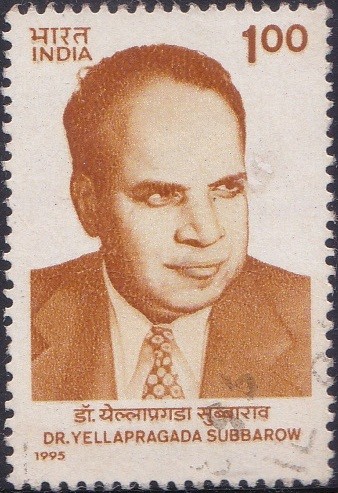
Every year, millions of people take medicines that fight cancer, treat autoimmune diseases, prevent birth defects or cure bacterial infections. Few know that many of these breakthroughs trace back to Yellapragada Subbarow, an Indian scientist who was never awarded a Nobel Prize.
At Harvard Medical School, Subbarow worked with biochemist Cyrus Fiske to develop the Fiske-Subbarow method, a technique for estimating phosphorus in biological samples that remains important in laboratory medicine today. He also advanced early understanding of adenosine triphosphate, or ATP, now recognised as the primary energy-carrying molecule in living organisms.
After joining Lederle Laboratories in 1940, his research on folic acid established why the vitamin is recommended during pregnancy worldwide, and laid the foundation for aminopterin, one of the earliest drugs to induce remission in childhood leukaemia, later leading to methotrexate. His leadership also contributed to the discovery of Aureomycin, the first tetracycline antibiotic, and diethylcarbamazine, still used to help eliminate lymphatic filariasis.
Despite the scale of this work, the recognition Subbarow received during his lifetime never matched it. He died in New York in 1948, at just 53, without the honours later awarded to scientists in related fields.
Historians of science and medical researchers today widely acknowledge that his discoveries helped shape modern pharmacology. India has honoured him with a commemorative postage stamp, and his story continues to be taught as an example of scientific perseverance.
Image: Wikimedia Commons



Leave a Reply