How a Shark That Lives 400 Years Keeps Its Eyesight Sharp — And What It Means for Humans
Greenland sharks, once assumed blind, appear to retain undamaged retinas for centuries, a finding researchers hope could inform treatments for human vision loss.
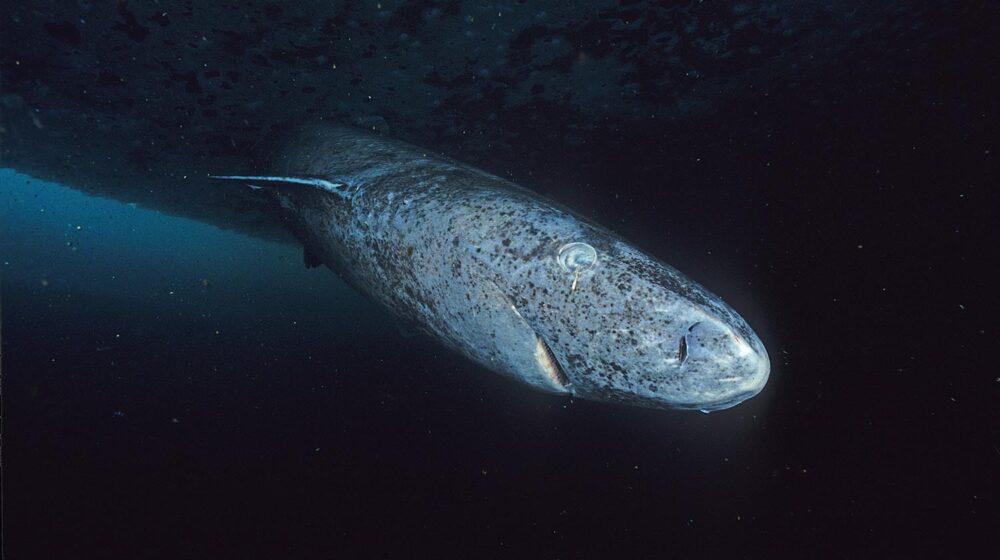
The Greenland shark’s ability to live up to 400 years has long fascinated scientists, but a new discovery about its eyes may end up being the more significant finding: the animal’s retina appears to stay largely undamaged across centuries, and researchers think that could hold lessons for human vision.
Researchers had assumed these sharks were essentially blind, given their cloudy, parasite-covered eyes and their life spent in the pitch-black waters of the Arctic. That view shifted after Dorota Skowronska-Krawczyk, an associate professor at the University of California, Irvine, noticed a Greenland shark tracking light with its eyeball in video footage — a clear sign of active vision.
To confirm this, scientists collected Greenland sharks near Disko Island in Greenland between 2020 and 2024 and shipped preserved eye tissue to Skowronska-Krawczyk’s lab. PhD student Emily Tom’s histological analysis found no evidence of cell death in the retina, and rhodopsin — the protein responsible for vision in dim light — was fully functional and specifically tuned to detect blue light, which travels furthest through water.
The study, published in Nature Communications as ‘The visual system of the longest living vertebrate, the Greenland shark,’ was co-authored with University of Basel researchers Walter Salzburger and Lily G Fogg. It identifies a DNA repair process that appears to shield the shark’s retina from age-related decline.
Since the human eye is often among the first parts of the body to show signs of ageing — a factor in conditions like macular degeneration and glaucoma — Skowronska-Krawczyk says the shark’s biology offers a rare natural model for studying how tissue can resist ageing, one that could eventually shape new treatments for human vision loss.

Leave a Reply